
Fall Rat Season in Dallas: Why October Fills Attics
Last updated: October 2026
The First Cold Front Is the Starting Gun
Roof rats live around Dallas homes all year — in trees, along fence lines, in sheds and under decks. What changes in October is motivation. When the first real cold front pushes through North Texas and nights drop into the 50s, the outdoor living gets worse at exactly the moment pecans, acorns and fallen fruit — the summer buffet — are running out. Your attic, warm and dry and full of soft insulation, stops being one option among many and becomes the obvious one.
This is why pest companies across DFW see attic calls surge in October and stay elevated through winter, rather than spread evenly across the calendar. The breeding math makes it worse: North Texas winters are mild enough that roof rats reproduce nearly year-round, so the population looking for winter shelter in November is at its annual peak.
The practical takeaway: in Dallas, rodent control is a fall sport. The homeowner who walks the roofline in early October is working with a small problem. The one who waits for scratching sounds in December is working with an established colony — and holiday-week scheduling.
Why Dallas Attics, Specifically
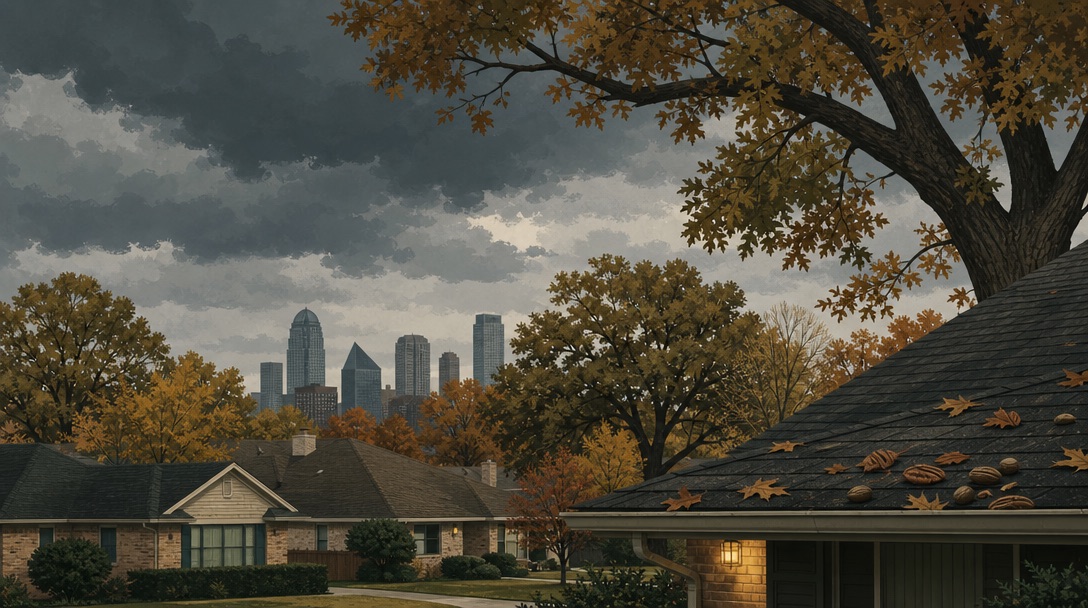
Three local features do the recruiting. Tree canopy: in established neighborhoods — Lake Highlands, Lakewood, East Dallas, older Plano and Arlington — mature oaks and pecans give rats an aerial route onto the roof; any branch within about six feet is a bridge. Fence lines: board fences connect every yard on the block, so one infested property feeds the whole street. Brick veneer: North Texas homes are built with weep holes and generous roof returns, and unscreened they are doorways a rat can use tonight.
None of this means your home is dirty or neglected — roof rats are a neighborhood-level population, and the cleanest kitchen on the street gets the same visit. It means the building envelope, not housekeeping, is the real defense.
Early Signs Worth Catching in October
The earliest signs are subtle, and October is when they start. Listen for scampering or scratching overhead in the first two or three hours after dark — roof rats are most active right after sunset, so 9 pm noise points to rats while daytime scurrying is more often squirrels (a different, wildlife job). In the attic, look for droppings along beams — olive-pit-sized with pointed ends — greasy rub marks on joist tops, gnawed wire insulation or PVC, and tunnels pressed into the insulation.
Outside, check for hollowed-out pecans or citrus under trees, droppings along fence tops, and a dog that has started staring at the ceiling or walls. One sign proves nothing; two or three together mean it's time for a real inspection — ours or anyone's. The full identification walkthrough is in our Dallas roof rat guide.
What to Do Before the First Hard Freeze
The highest-value moves are the cheap ones, and most are DIY: screen the weep holes, trim branches back six feet from the roof, seal the garage-door corners, and pick up fallen pecans and fruit. Our pre-winter rodent-proofing checklist walks the whole house in order.
If you're already hearing noise, skip prevention and go straight to the professional sequence — inspection, trapping, then exclusion (sealing every entry point). Acting in October usually means a shorter trapping phase, because the colony hasn't settled in yet. What that should cost is on our Dallas cost page, and the companies we rate for this work are in the top picks comparison.
What Waiting Costs
The same job is more expensive in January than in October, for boring reasons: a bigger colony means more trap checks, contaminated insulation means remediation gets added to the quote, and chewed wiring — rats gnaw constantly — turns a pest job into an electrician visit. Nationally, heavy attic contamination is the single biggest line item that separates a $500 rodent job from a $3,000 one, and contamination is a function of time.
There is also a queue effect: every rodent company in the metro is busiest from the first cold front through the holidays. October callers get same-week inspections; December callers get put on a list.
Sources
- Texas A&M AgriLife Extension — roof rat biology and seasonal management in Texas
- Seasonal call patterns as reported by DFW operators in our licensed company directory; identification details in our roof rat guide