
Rodent Exclusion in Dallas: What It Costs and What You’re Paying For (2026)
Last updated: July 2026
Ranges on this page are compiled from national cost guides and published Dallas-area pricing as of July 2026. We are collecting direct quotes from Dallas companies and update as they come in.
What Rodent Exclusion Actually Is
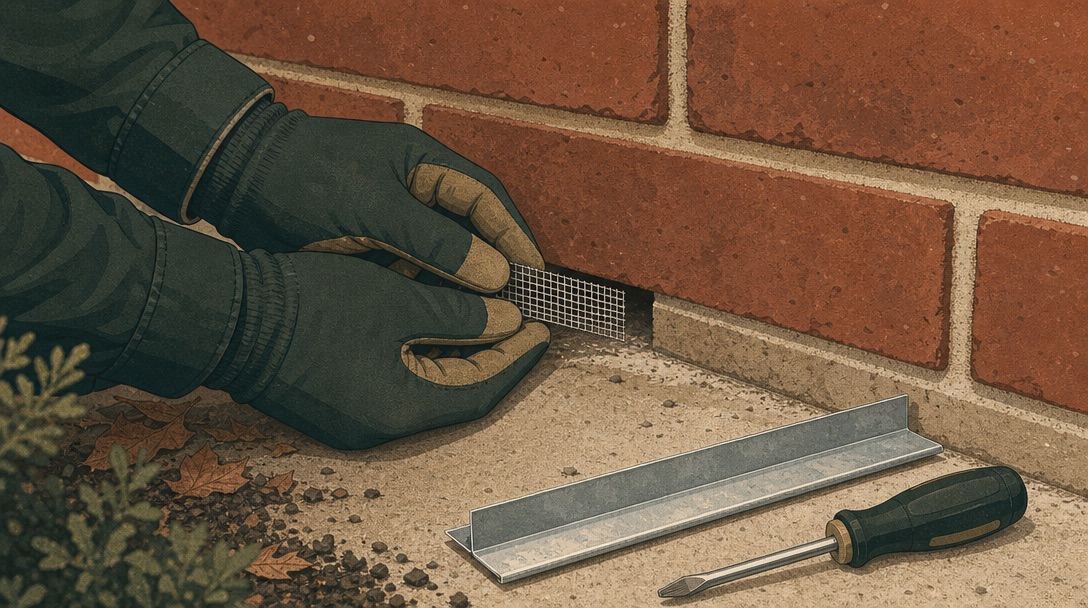
Exclusion (companies also call it rodent proofing or seal-up) is construction work, not chemistry: a technician walks the roofline and the foundation, lists every opening a rat or mouse can use, and closes each one with materials rodents can't chew through. On Dallas homes that means screening weep holes in the brick, flashing the roof returns where the eave meets the wall, capping attic vents, and sealing gaps around AC lines and utility penetrations.
It's the second half of the proven sequence — trap first, then seal. Trapping removes the animals already inside; exclusion is what keeps the neighborhood population from replacing them through the same holes. A quote that's all bait stations and no sealing is a subscription, not a fix — our roof rat guide covers why that distinction matters so much in Dallas specifically.
How Much Does Rodent Exclusion Cost?
The honest answer is that exclusion is priced per home, not per rat: the driver is how many entry points the inspection finds and how hard they are to reach. A one-story ranch with three gaps is a few hundred dollars; a two-story with dormers, a dozen roof returns and unscreened weep holes on every wall is the top of the range.
What the Price Should Include
A legitimate Dallas exclusion quote includes a written list of every entry point found (not just the "active" ones), the materials named — stainless or galvanized mesh, hardware cloth, metal flashing, purpose-made weep hole covers; foam alone doesn't count, rats chew it — and a written warranty against re-entry, typically one year and renewable. The warranty is the product: you're paying for the company to stand behind the claim that the house is sealed.
Watch for the scope trick that explains why bids on the same house differ by hundreds of dollars: one company quotes sealing the two holes with rub marks, another quotes every potential opening on the roofline. Ask each bidder for the count. The cheaper bid is often the incomplete one — and re-entry through the unsealed hole isn't covered by anyone's warranty.
Why Dallas Homes Need It More Than Most
North Texas brick construction comes with weep holes — intentional gaps in the mortar for moisture drainage, dozens per home, each one rodent-sized unless screened. Add roof returns (the #1 roof-rat entry in the metro), mature oak and pecan limbs that bridge onto rooflines, and continuous board fences connecting every yard on the block, and a Dallas home without exclusion is open on the schedule of the neighborhood rat population, not yours. The guide lists the full entry-point checklist inspectors use here.
DIY Exclusion: What’s Realistic
Ground-level work is a reasonable weekend project: snap-in weep hole covers cost a few dollars each, a garage-door bottom seal is a hardware-store part, and steel wool plus sealant handles gaps around pipes under sinks. If you do nothing else, do those.
The roofline is a different job. Roof returns, vent caps and eave gaps are ladder work with real fall risk, and missing one opening means the whole effort bought nothing — that's the case for paying a professional with a warranty. If you've been trapping for two weeks and still hear activity, there's an entry point you haven't found; stop buying traps and get the roofline inspected. See what the full job costs and who we'd call.
Dallas Rodent Exclusion Prices
| Scope | Typical price | Notes |
|---|---|---|
| Spot seal-up (1–3 openings) | $150 – $600 | Ground-level gaps, a couple of weep hole runs |
| Single-story home, full exclusion | $400 – $1,200 | The common case for a Dallas ranch under 1,500 sq ft |
| 1,500–2,500 sq ft | $700 – $1,800 | More roofline, more weep holes |
| Two-story / complex roofline | $1,000 – $2,500+ | Dormers, multiple roof returns, ladder time |
| Warranty renewal | varies | Ask: one-year renewable is the standard worth having |
Dallas Companies Whose Reviews Mention Sealing Work
Pulled from our licensed directory: companies where Google reviewers specifically bring up attic sealing, hole sealing or rodent exclusion-type work.
| Company | Google rating | TX license | Based in | Phone |
|---|---|---|---|---|
| Adams Exterminating | 5★ (1765) | TPCL #566084 | Denton | (940) 239-9786 |
| Webb Pest Service Control & Extermination | 5★ (632) | TPCL #570819 | Fort Worth | (512) 537-1475 |
| All N-1 Pest Control Management LLC | 5★ (118) | TPCL #566206 | Denton | (832) 375-5687 |
| First In Rodent and Pest Services | 5★ (100) | TPCL #814124 | Dallas | (281) 703-4684 |
| Ridtechs DFW | 5★ (76) | TPCL #945669 | Dallas | (469) 213-0442 |
| Critter Stop | 5★ (75) | TPCL #896255 | Fort Worth | (817) 670-5667 |
Full profiles, weekend hours and what reviewers say about each — in the complete Dallas–Fort Worth directory.
Frequently Asked Questions
How much does rodent exclusion cost in Dallas?
Most Dallas exclusion jobs run $400–$2,500 depending on home size and roofline complexity. A spot seal-up of a few ground-level openings can be $150–$600; a two-story home with dormers and unscreened weep holes throughout is the top of the range.
Is rodent exclusion the same as rodent proofing?
Yes — companies use "exclusion," "rodent proofing" and "seal-up" interchangeably. All mean the same work: finding every entry point on the home and permanently closing it with chew-proof materials like steel mesh and metal flashing.
Is exclusion worth it, or is trapping enough?
Trapping alone is temporary in Dallas: fence lines and tree canopies keep neighborhood rats moving, and new ones replace trapped ones within weeks through the same openings. Exclusion is a one-time capital fix — that’s why it costs more and why it’s worth it.
How long does exclusion work take?
The sealing itself is usually a one-day job on a single-story home, sometimes two days on large or complex rooflines. The full program — trapping first, then seal-up — typically runs two to four weeks end to end.
Can I do rodent exclusion myself?
Ground level, yes: weep hole covers, garage door seals and pipe gaps are DIY-friendly. The roofline usually is not — roof returns and vent gaps are ladder work, and one missed opening undoes everything. Warranty-backed professional work exists for exactly that reason.
Get Quotes from Dallas Rodent Pros
Tell us what you're hearing or seeing — we'll match you with licensed Dallas rodent control companies for free quotes. No obligation.