
The Pre-Winter Rodent-Proofing Checklist for Dallas Homes
Last updated: October 2026
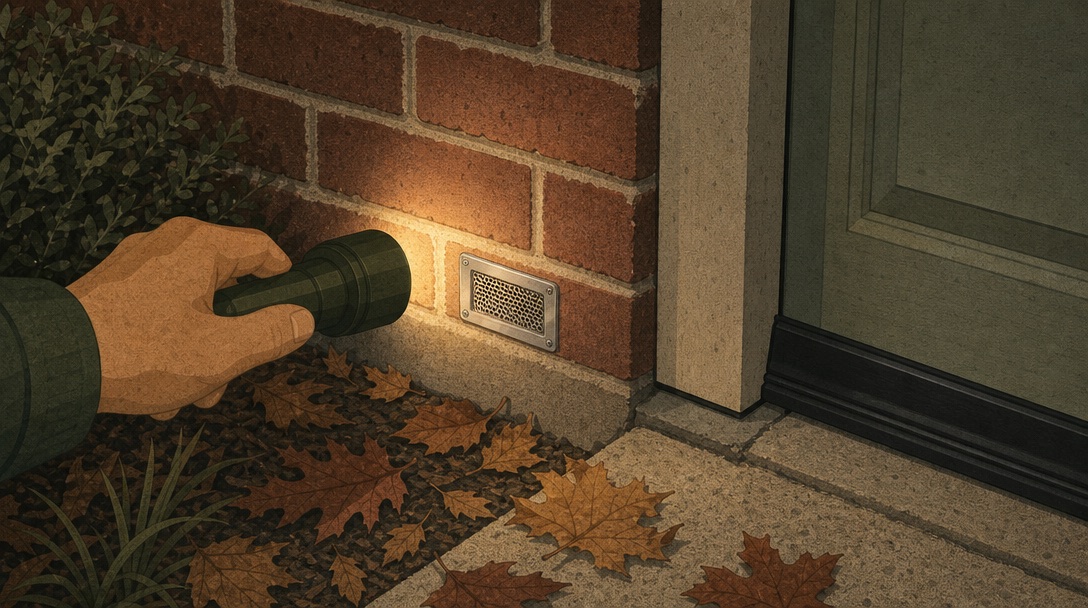
The 20-Minute Perimeter Walk
Do this once each fall, flashlight in hand, before the first cold front. A rat needs a gap the size of a quarter; a mouse, a dime — so anything you can fit a thumb into counts.
Weep holes. The ventilation gaps in brick veneer at the base of walls are the classic North Texas entry. Purpose-made weep hole covers (stainless mesh inserts) cost a few dollars each and push in by hand — every unscreened weep hole gets one.
Garage door corners. The bottom rubber seal almost never reaches the corner posts. If you can see daylight at the corners, replace the bottom seal or add corner guards — this is the #1 ground-level entry in the metro.
Utility penetrations. Where the AC lineset, gas line, cable and hose bibs enter the wall, look for gaps around the sleeve. Seal with copper or stainless mesh plus sealant — never expanding foam alone, which rats chew through in a night.
Vents. Dryer vents should close flush; crawl-space and gable vents need intact 1/4-inch hardware cloth, not insect screen.
Roofline and Attic Checks
From the ground with binoculars — or safely from a ladder if you're comfortable — check the spots Dallas inspectors cite most. Roof returns: the corner where the eave meets the wall is the top roof-rat entry in DFW; look for a dark gap at the corner of each gable. Attic vents and turbines: screens should be intact metal, with no daylight or chew marks at the edges. Soffits: any sagging or displaced panel is an open door.
Then the vegetation: tree limbs trimmed back roughly six feet from the roofline, vines off the walls, and no stacked materials — firewood, lumber, storage — against the house. In the attic itself, a flashlight scan for droppings on the beams, rub marks on joist tops and fresh insulation tunnels tells you whether anyone has already moved in.
Food and Yard Habits That Actually Matter
Fallen pecans and fruit are the October buffet — rake and remove them weekly through the season; an unharvested tree feeds the whole block's rat population. Pet food and birdseed go in metal or heavy plastic bins with lids, and outdoor bowls come in overnight. Bird feeders are rat feeders: if you keep one, mount it on a pole with a baffle, away from fences and branches.
Firewood goes on a rack, off the ground, away from the house wall. Trash cans get lids that actually close. None of this starves an established attic colony — but it decides whether your yard is habitat or just territory rats cross on the way to someone else's.
What to Skip
Save your money on the products that fail in testing and in the field. Ultrasonic repellers have no credible evidence behind them. Mothballs, peppermint oil and dryer sheets don't survive contact with a motivated rat. Glue boards create a suffering-and-odor problem without touching the entry points. And outdoor poison bait as a first move backfires twice: rats die in walls, and Dallas's owls and hawks — the free rodent control — get secondarily poisoned. Trap-and-seal beats bait-and-hope every time; the reasoning is laid out in our roof rat guide.
Where DIY Ends and a Pro Takes Over
Everything above is reasonable homeowner work. The line is crossed when any of these are true: you hear noise overhead (roofline inspection is ladder work with real fall risk), droppings are large-caliber rather than rice-sized, you've trapped for two weeks and activity continues — which means entry points you haven't found — or contamination is heavy enough that insulation needs remediation.
At that point you're buying the professional sequence: full inspection, trapping, then exclusion — sealing every entry point with metal, with a written warranty. Typical Dallas pricing is on our cost page, and the licensed companies we rate for this work are in the top picks comparison and the full DFW directory. If you're already hearing the first scratching of the season, read why October is when Dallas attics fill up — the short version is that earlier is cheaper.
Sources
- Texas A&M AgriLife Extension — rodent exclusion and sanitation guidance
- Entry-point patterns from Dallas-Fort Worth inspection practice, cross-checked against the companies in our licensed directory