
Rats in Your Dallas Attic? Roof Rats, Norway Rats & What Actually Works
Last updated: July 2026
Which Rodent Is in Your Attic?
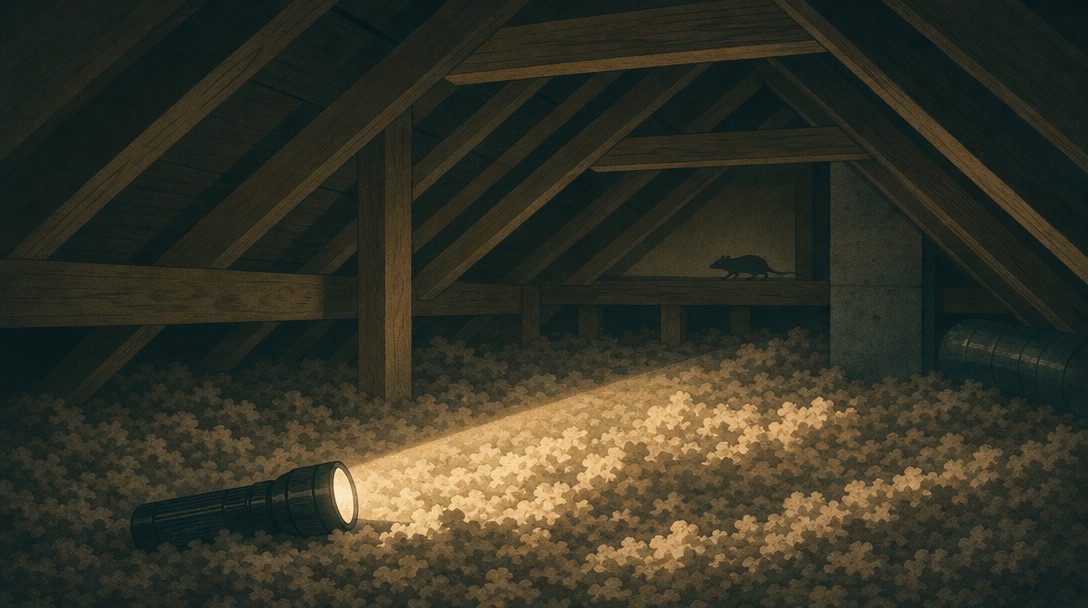
In Dallas, the answer is usually the roof rat (Rattus rattus): sleek, dark, with a tail longer than its body, an excellent climber that nests overhead — attics, soffits, palm skirts, dense vines. If you hear scampering in the ceiling at dusk or during the night, roof rats are the default suspect.
Norway rats are stockier burrowers that stay low — crawl spaces, foundations, alleys near dumpsters — and are less common in North Texas homes. House mice show up at ground level too: droppings the size of rice grains in kitchen drawers and garages, versus roof-rat droppings the size of olive pits with pointed ends.
The distinction matters because it sets the treatment: roof rats require roofline exclusion; mice can usually be solved at ground level for far less money.
Signs You Have Roof Rats
The classic Dallas pattern: scratching or scampering overhead in the first hours after dark, especially from October through winter. Roof rats are most active in the two or three hours after sunset, so noise at 9 pm points to rats, while daytime scurrying is more often squirrels — a distinction that matters, because squirrel removal is a different (wildlife) job under different rules.
Other confirmations: droppings along attic beams or in the garage — olive-pit-sized with pointed ends for roof rats, rice-grain-sized for mice; greasy rub marks where fur drags along a repeated route (check the tops of joists and around any hole); gnawed wiring insulation or PVC; insulation tunnels and flattened nesting spots; and a dog or cat that suddenly stares at the ceiling.
Outside, look for chewed citrus or pecans under trees, hollowed-out fruit still hanging, and droppings along fence tops — roof rats use fences as highways between yards. If you see a rat crossing a power line at dusk, that's the neighborhood population telling you to check your roof returns now, not in spring.
What Professional Removal Looks Like, Week by Week
Day 1 — inspection. A good inspector walks the roofline and the attic, and hands you a written list of entry points and activity zones. This visit is where quotes are actually made honest: everything else is priced off this list.
Week 1–3 — trapping. Snap traps go on the runways identified in the attic (along beams and walls — rodents hug edges). The company returns every few days to clear and reset. Activity typically drops to zero within one to three weeks.
Seal-up. Once trap activity confirms the population is gone or nearly gone, every entry point gets sealed: stainless mesh in weep holes, metal flashing on roof returns, screened vent covers, sealed utility penetrations. On most single-story Dallas homes this is a one-day job.
After. Optional attic remediation if contamination is heavy, and a written warranty against re-entry — one year renewable is the standard worth asking for. If a company proposes skipping straight to bait boxes without this sequence, you're buying a subscription, not a solution.
Why Dallas? Trees, Fences and Weep Holes
Three features make the metro a roof-rat paradise. First, the tree canopy: mature oaks and pecans in neighborhoods like Lake Highlands, Lakewood and East Dallas give rats an aerial route onto rooflines — a branch within six feet of the roof is a bridge.
Second, continuous fence lines. Board fences connect every yard on the block, so one untreated infestation feeds the whole street.
Third, brick veneer construction. North Texas homes are built with weep holes — intentional gaps in the brick for moisture drainage. They're necessary, but unscreened they are rodent doorways, and nearly every Dallas home has dozens.
Add winters mild enough for near-year-round breeding, and the seasonal spike writes itself: when the first cold front lands in October, attic calls surge across DFW.
The Entry Points Dallas Homes Almost Always Have
Professional inspectors find the same list on most North Texas homes: unscreened weep holes; roof returns (the gap where the eave meets the wall — the #1 roof-rat entry in the metro); gaps around attic vents and turbines; unsealed AC line and utility penetrations; gaps under garage door corners; and oversized openings around plumbing under sinks. A rat needs a gap the size of a quarter; a mouse, a dime.
Why Poison Alone Backfires
Bait looks like the cheap fix, and it's how bad programs turn into subscriptions. Poisoned rats die inside wall voids and attic insulation — the odor lasts weeks and locating carcasses means cutting drywall. Meanwhile the colony outside replaces the dead through the same open entry points, so the bait station needs refilling forever.
Secondary poisoning is the other cost: Dallas's owls and hawks — the free rodent control — eat poisoned rats and die. Modern practice keeps rodenticide outdoors in limited, monitored roles and puts money into exclusion instead.
What Actually Works: Trap, Seal, Clean
The proven sequence: inspect (find every entry point and the activity zones), trap (snap traps on attic runways, checked over one to three weeks), exclude (seal every point with steel mesh, metal flashing and sealant — foam alone gets chewed through), then optionally remediate the attic if contamination is heavy.
The order matters: seal-up happens after trapping starts, so remaining rats hit the traps instead of chewing a new hole out of panic. Done right, with a written warranty, this ends the problem instead of managing it.
When DIY Is Enough — and When It Isn't
Reasonable DIY: a mouse or two at ground level — snap traps baited with peanut butter, set perpendicular to walls in the garage and under sinks, checked daily. Add purpose-made weep hole covers (they cost a few dollars each and install by hand), a garage-door bottom seal, and branch trimming six feet back from the roof, and you've done the prevention work most Dallas homes never get.
Skip the products that don't work: ultrasonic repellers have no credible evidence behind them, mothballs and peppermint oil don't survive contact with a motivated rat, and glue boards create a suffering-and-odor problem without touching the entry points.
Call a professional when the noise is overhead, when droppings are large-caliber, or when you've trapped for two weeks and activity continues — that means open entry points you haven't found, and roofline inspection is ladder work with real fall risk. See our comparison of Dallas rodent companies for who to call and what it should cost.
Keeping Them Out: Prevention That Works in North Texas
After exclusion — or instead of ever needing it — the same short list keeps Dallas homes rat-free. Keep tree limbs trimmed six feet off the roof and don't let vines climb the walls. Pick up pecans and fruit when they drop; an unharvested backyard tree is a feeding station. Store pet food and birdseed in metal or heavy plastic bins, and don't leave bowls out overnight. Firewood goes on a rack off the ground, away from the house wall.
Twice a year — ideally each fall before the first cold front — walk the house: check weep hole screens, the rubber seal under the garage door, and the roofline for new gaps. October is when Dallas attics fill up; ten minutes with a flashlight in September is the cheapest rodent control you'll ever buy.
Sources
- Texas A&M AgriLife Extension — rodent identification and management guidance for Texas
- Published pricing and cost-guide data, July 2026 (see cost page methodology note)